AI is the new admissions front door
Students ask AI engines about fit, cost, and outcomes before they ever visit your site, and those answers shape the shortlist.
A growing share of prospective students no longer begin their college search on institutional websites or even through traditional search. They are starting inside AI answer engines such as ChatGPT, Google Gemini, Microsoft Copilot, and Perplexity, asking direct questions about fit, majors, cost, outcomes, and campus experience. Those answers function like a first campus visit, a first info session, and a first conversation with a counselor all at once. By the time a student lands on an admissions page, they often already have a shortlist in mind, and AI played a role in forming it.
Students ask AI engines about fit, cost, and outcomes before they ever visit your site, and those answers shape the shortlist.
With fewer traditional-age students in many regions, small shifts in visibility and positioning can impact yield and enrollment.
See what students are asking, which sources AI trusts, and what to change to earn accurate, favorable recommendations.
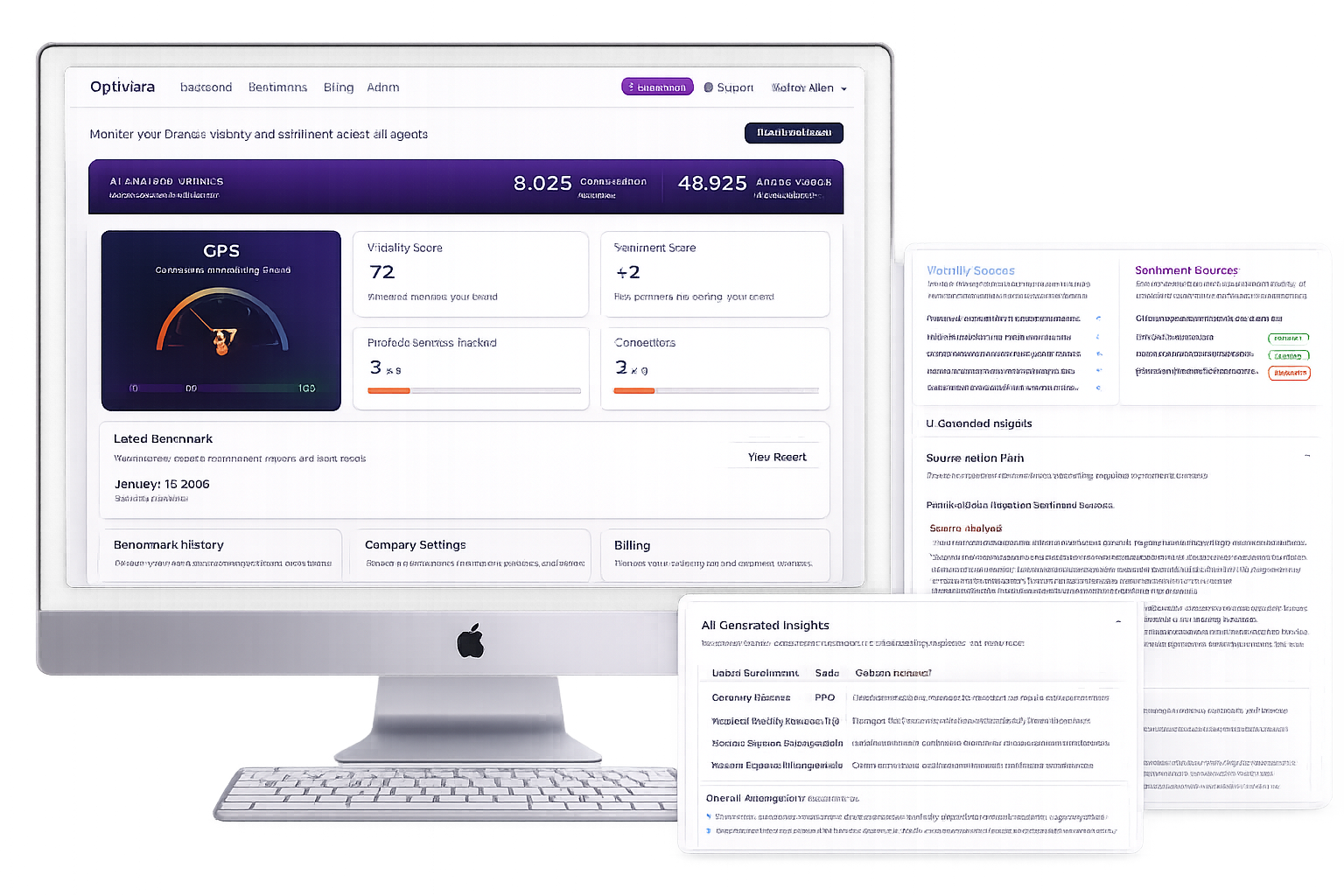
The Optivara™ Insights platform is built for agencies to improve how AI answer engines describe and recommend the colleges and universities they support.
They leverage the platform to track visibility and sentiment using industry-tuned benchmarks that remain consistent over time, then follow prioritized recommendations to improve what appears in AI answers.
of AI-generated answers cite the university’s own website.
AI answers rely more on rankings, outcome data, and third-party sources.
Account for only 9.6% of the sources AI cites when asked about a university.
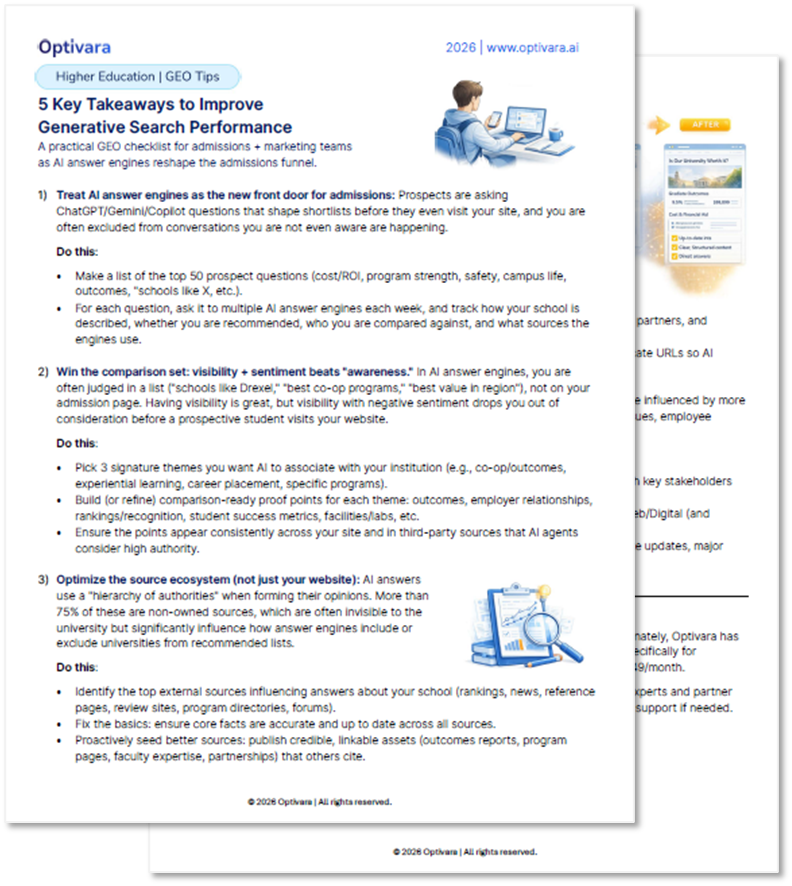
Prospective students are increasingly using AI answer engines like ChatGPT, Gemini, Copilot to decide which schools to consider. Those AI-generated answers often shape shortlists before a student visits your website, and they’re influenced by a small set of trusted sources, not your positioning slides.
Identify the questions prospects are asking right now.
Improve visibility and sentiment versus peer schools.
Optimize the source ecosystem that AI engines rely on.
Make key pages more “AI-readable” and conversion-ready.
Operationalize GEO across web, comms, admissions, and marketing.
Higher ed is tightening fast: fewer traditional-age students in many regions, more competition for attention, and more value-driven decision making. At the same time, AI answer engines are shaping shortlists before students ever reach your admissions pages, and those engines often rely on whatever narrative is easiest to find and repeat. The institutions that act now will shape how they’re described and recommended, while others fall behind. That’s why Generative Engine Optimization (GEO) is becoming a new core enrollment discipline, and why Optivara exists to show how AI describes your institution today and give you a measurable plan to improve what students see next, before competitors lock in the advantage.